

Choosing a water-treatment system is not about picking "the best" in absolute terms, but the one best suited to a specific use: a household wanting ultra-pure drinking water, a restaurant that must protect its machines, and an office looking for unlimited chilled water do not have the same needs. DIMM structures its offer around three families, which this comparison places side by side, figures included.
1. Three families, three uses
Before comparing models, you have to compare intentions. The DIMM ranges break down as follows:
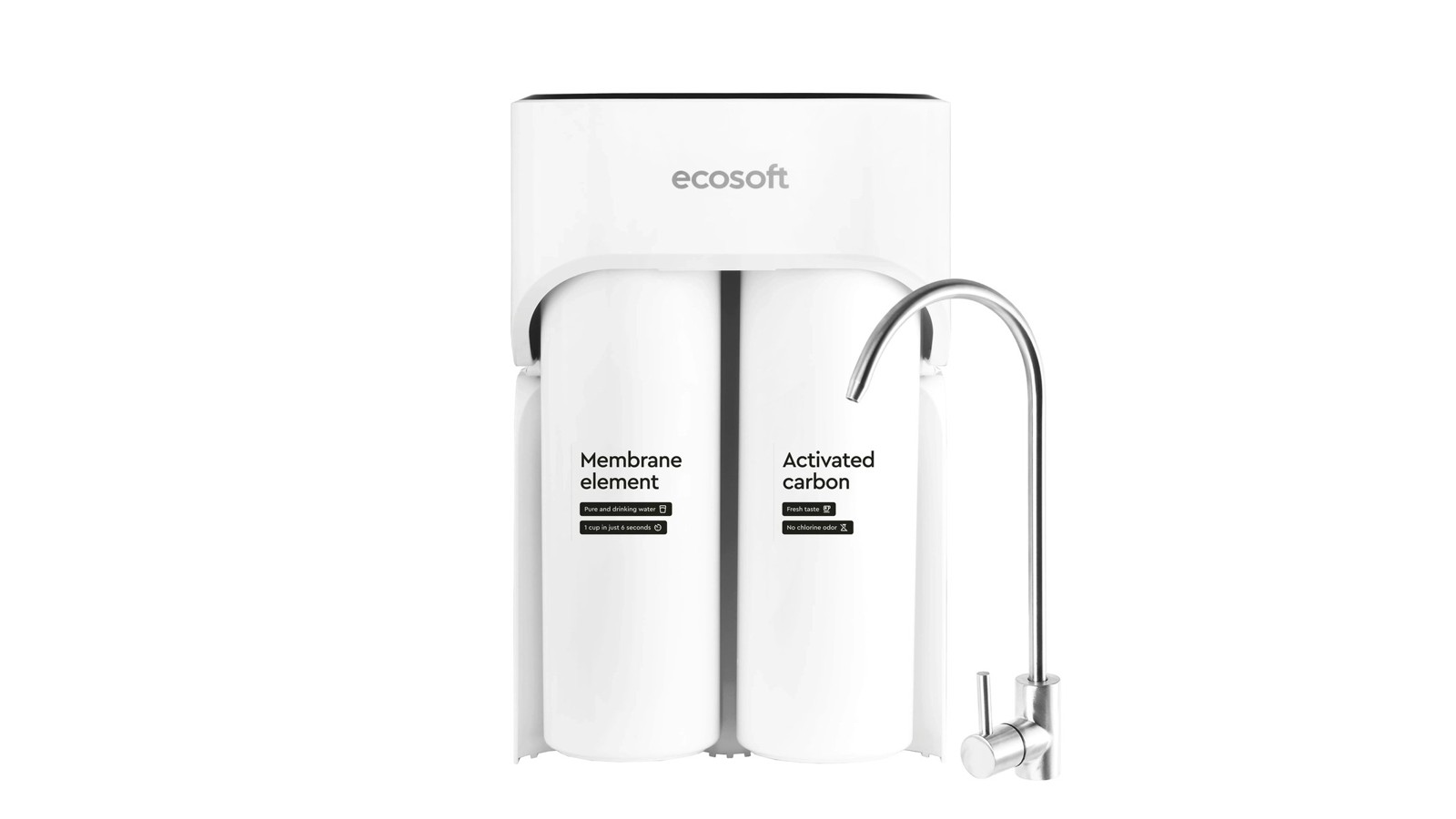
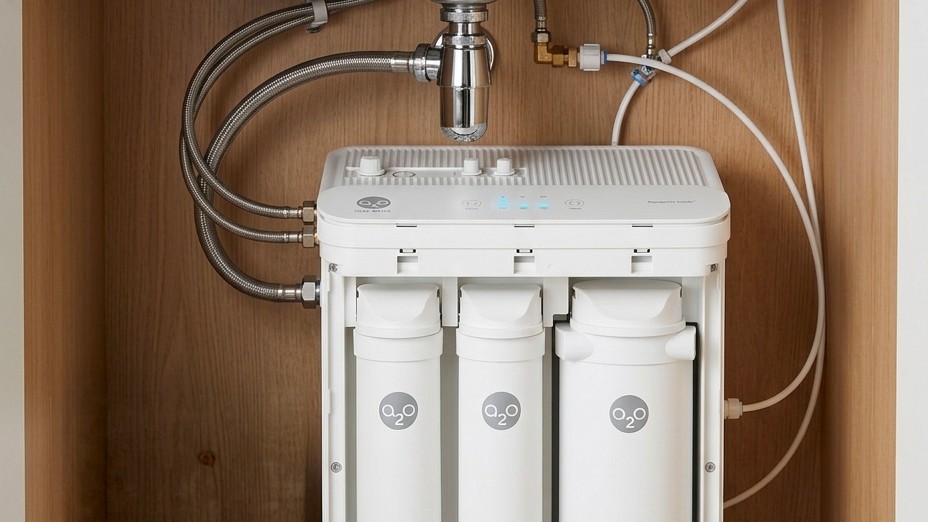
- Domestic RO units (Ecosoft Cross Solo, Cross Max, A2O Pure): ultra-pure drinking and cooking water, under-sink installation, flow of around 90 to 120 L/h.
- Professional & industrial RO (Ecosoft MO6500 to MO10000): continuous production of large volumes for HORECA, healthcare, laboratories and industry, from 250 to 500 L/h and beyond.
- Water fountains (ORION, Prestige Mini): dispensing comfort · filtered water, cold / ambient / hot · for offices, waiting rooms and homes.
The reading criteria of this comparison are the same for all: flow, recovery rate, footprint, accepted inlet water quality, filtration technology, connectivity level and target sector.
2. Reverse osmosis or filtering fountain: two philosophies
The first fork is not a question of brand, but of treatment level.
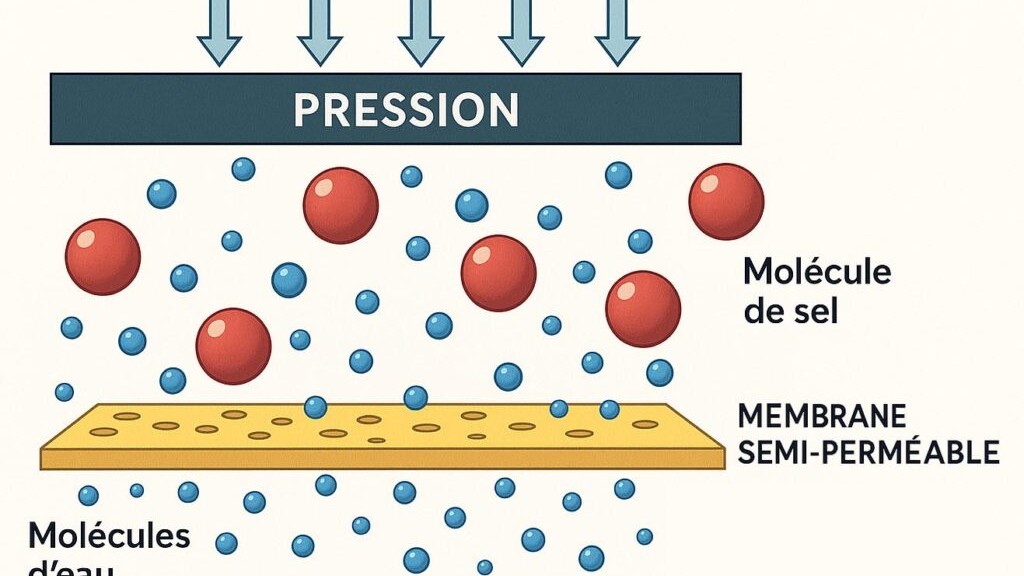
Reverse osmosis filters at molecular scale: under pressure, water crosses a semi-permeable membrane that retains 98 to 99% of dissolved salts, heavy metals, nitrates, PFAS, micro-organisms and microplastics. It is the most thorough purification · for drinking, cooking and all sensitive uses.
A filtering fountain targets another goal: comfort. It refines tap water (particles, chlorine, tastes and odours) and dispenses it at the right temperature. It does not "demineralise" like an RO unit, but it advantageously replaces plastic bottles. Some fountains can also be fed with already-osmosed water to combine both benefits.
3. Ecosoft domestic RO units: Cross Solo vs Cross Max vs A2O Pure
This is the richest range. The three models share the same promise · direct flow, no tank (water filtered on demand, no stagnation) · but differ in flow, footprint and technology.
| Criterion | Cross Solo | Cross Max | A2O Pure |
|---|---|---|---|
| Reference | MO1500PECO | MO2800PECO | A2O Pure |
| Flow | 90 L/h (1.5 L/min) · 500 GPD | 120 L/h (2 L/min) · 800 GPD | Direct flow |
| Tank | None (direct flow) | None (direct flow) | None (direct flow) |
| Recovery rate | > 50% | 67% | High |
| Technology | Reverse osmosis (RO) | 4-stage reverse osmosis | Aquaporin Inside® |
| Dimensions (mm) | 435 × 140 × 458 | 304 × 198 × 191 | Compact |
| Weight | ~11 kg | 6 kg | · |
| Inlet pressure | 2–5 bar | 1–4 bar | · |
| Monitoring / connectivity | Cartridge indicator | Screen + alerts (600 L / 200 L) | Connected IoT + quality monitoring |
| Main strength | Compactness, simplicity | Best flow/recovery | Premium, design, health |
In short: the Cross Solo suits households wanting the essentials without a tank; the Cross Max is the best balance of flow / footprint / recovery (the most compact while being the fastest); the A2O Pure plays the premium card with Aquaporin technology and connectivity.
⚠️ Check the inlet water quality
Domestic RO units have feed-water limits. For the Cross Max, for example: pH 6.5–8.5, max TDS 1,500 mg/L, max hardness 500 mg CaCO₃/L (≈ 20 °dH), free chlorine < 0.5 mg/L, iron < 0.3 mg/L, manganese < 0.1 mg/L. Beyond that, pre-treatment (softener, iron removal, carbon filter) is required upstream.
4. Technology focus: direct flow, Aquaporin, pre-treatment
Direct flow (no tank)
The three domestic RO units work in direct flow: water is purified on demand, without a storage tank. Three benefits: space saving under the sink, no stagnation (and therefore no risk of bacterial growth in a static tank) and water that is always "fresh from the tap".
Aquaporin Inside® technology (A2O Pure)
The A2O Pure uses membranes incorporating aquaporins, natural water-transport proteins. This approach targets high removal rates (PFAS, pesticides, heavy metals, viruses, hormones, nitrates) while remaining compact, with connected monitoring of consumption and cartridges.
Pre-treatment, often decisive
Whatever the model, membrane lifespan depends on the inlet water. On hard or chlorinated water, a softener and a carbon pre-filter upstream protect the RO unit and space out replacements. This is a point DIMM's teams size from a water analysis.
5. Professional & industrial RO: MO6500 → MO10000
For large volumes and continuous operation, the scale changes: high-pressure pump, dedicated pre-filtration, controller, floor-standing frame. The Ecosoft professional range distributed by DIMM covers HORECA, healthcare, laboratories and industry.
| Criterion | MO6500 | MO6500 IoT | MO10000 |
|---|---|---|---|
| Flow | 250 L/h | 250 L/h | 500 L/h |
| Recovery rate | 75% | 75% | 75% |
| Max inlet TDS | 3,000 mg/L | 3,000 mg/L | 3,000 mg/L |
| Dimensions (mm) | 1450 × 540 × 385 | 1450 × 540 × 385 | 1450 × 540 × 385 |
| Weight | 60 kg | 60 kg | 70 kg |
| Pump | Grundfos HP | Grundfos HP | Grundfos HP |
| Controller | OC5000 | OC6000 (Econnect) | OC5000 |
| Specifics | BB10 5 µm pre-filtration, auto flush | Remote supervision, alerts, multi-site | 2 XLE-4040 membranes, raw-water blending |
| Target | Restaurants, cafés, hotels | Multi-site networks | Labs, food industry |
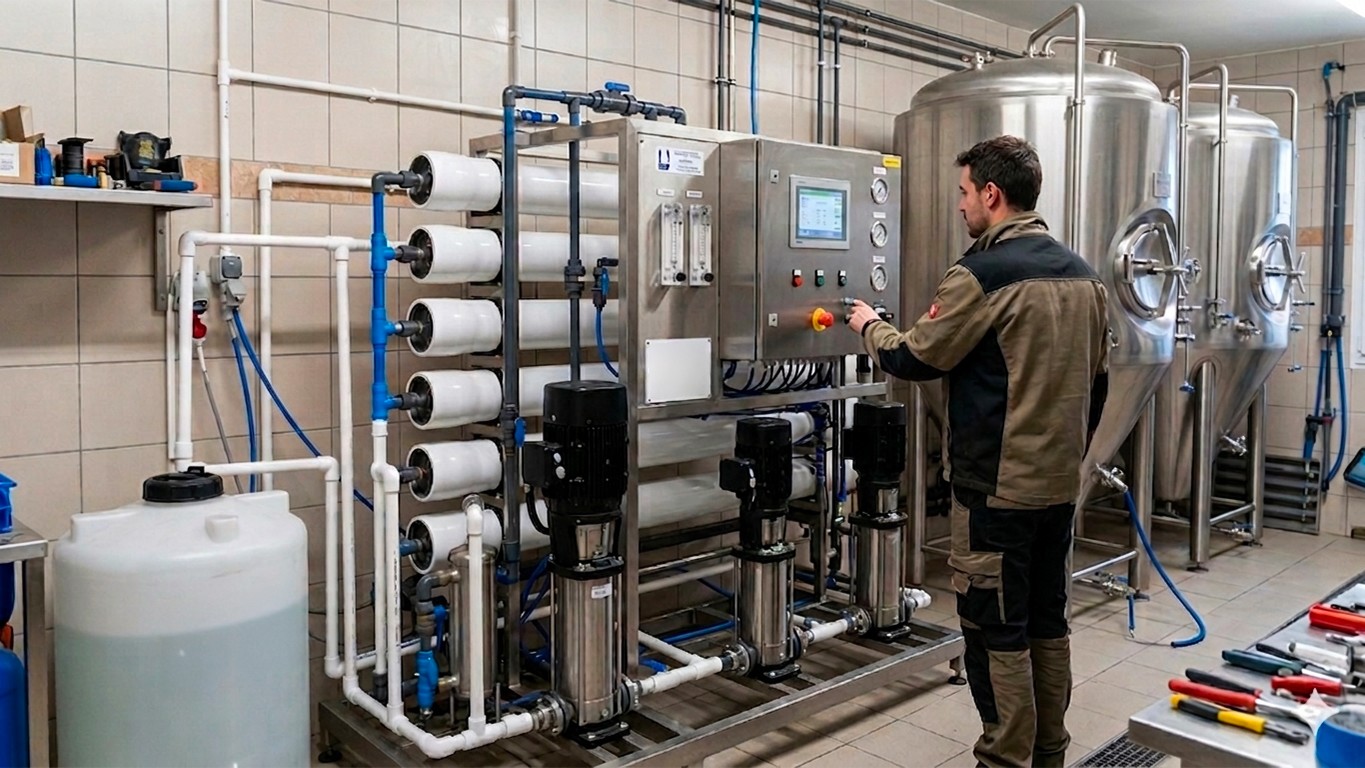
The choice is based on flow (250 vs 500 L/h), the need for remote supervision (IoT version, ideal for multi-site fleets) and the application. For very large volumes, the range extends beyond the MO10000.
🔗 Important · water analysis and pre-treatment
In professional settings, RO is almost always preceded by pre-treatment (softening, dechlorination, filtration). Sizing starts from a diagnosis: TDS, hardness, chlorine, iron, manganese, nitrates. Required water pressure: generally 2.5 to 6 bar; inlet temperature +4 to +30 °C.
6. Water fountains: ORION vs Prestige Mini
Fountains do not purify at molecular scale: they improve and dispense. Two complementary profiles.
| Criterion | ORION fountain | Prestige Mini fountain |
|---|---|---|
| Positioning | Multi-temperature, home & office | Compact, domestic |
| Temperatures | Cold / ambient / hot | Filtered water (daily use) |
| Supply | Mains or tank (depending on version) | Mains |
| Filtration | Particles, chlorine, tastes & odours | Multi-stage (sediment, chlorine, taste) |
| Comfort | Touchscreen, LED, tall spout, eco standby | Simple and intuitive, no storage |
| Safety / hygiene | Child lock (hot water), closed circuit | Fine filtration, constant quality |
| Target | Offices, waiting rooms, HORECA, homes | Private individuals, flats |
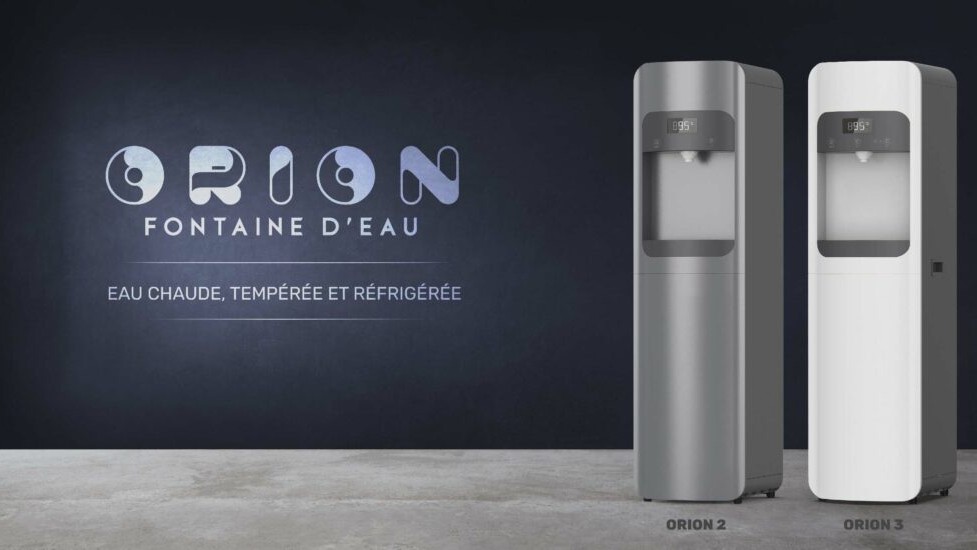
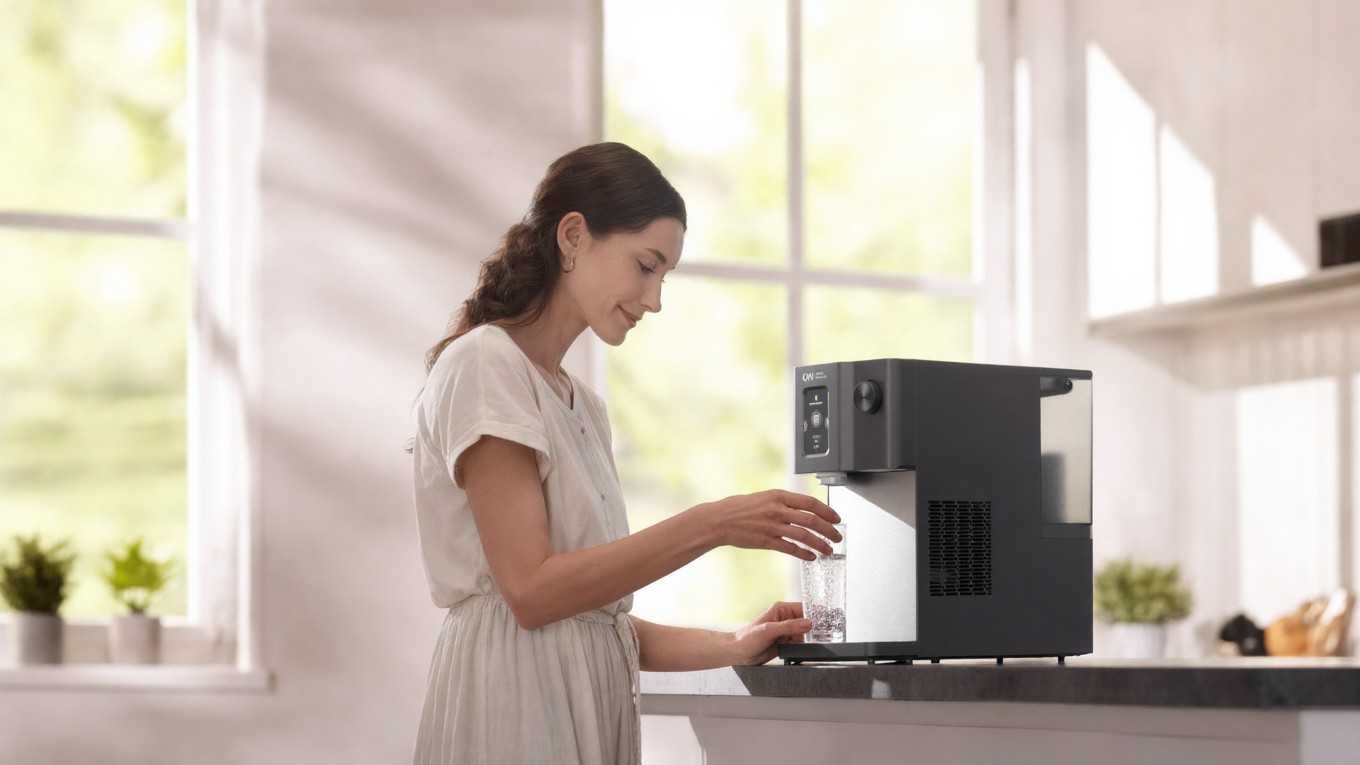
The ORION is the most versatile: its multi-temperature function (cold to quench thirst, hot for teas and coffees) makes it ideal for shared spaces. The Prestige Mini targets the household wanting to replace jugs and bottles with filtered water of constant quality, without taking up space.
7. Summary table: which system for which need?
| Your need | Family | Recommended model | Why |
|---|---|---|---|
| Pure drinking water, household, little space | Domestic RO | Cross Max | The most compact and the highest flow |
| Controlled budget, simple use | Domestic RO | Cross Solo | The essentials of direct flow, no tank |
| Premium, design, connected monitoring | Domestic RO | A2O Pure | Aquaporin Inside® + IoT |
| Restaurant, café, hotel | Professional RO | MO6500 | 250 L/h, compact, HORECA |
| Multi-site fleet to supervise | Professional RO | MO6500 IoT | Remote control and alerts |
| Lab, industry, large volumes | Industrial RO | MO10000 | 500 L/h, two membranes |
| Chilled/hot water in a shared space | Fountain | ORION | Multi-temperature, design, hygiene |
| Domestic comfort, bottle-free | Fountain | Prestige Mini | Compact, multi-stage filtration |
8. Choice method: start with the water
The right reflex is not to start from the product, but from the water and the use. Three questions are enough to guide the choice:
- What level of treatment? Thorough purification (drinking, cooking, sensitive uses) → RO. Comfort and temperature → fountain.
- What volume / flow? A household (90–120 L/h) does not have the same needs as a restaurant (250 L/h) or a lab (500 L/h).
- What inlet water? An analysis (TDS, hardness, chlorine, iron, manganese, nitrates) determines the model and any pre-treatment.
It is this logic · analysis first, equipment second · that guarantees performance over time and a good return on investment.
Conclusion: the right range for the right use
There is no universal "best" system, but a match between a need and a family. For a household's drinking water, the Ecosoft domestic RO units (Cross Solo, Cross Max, A2O Pure) offer cutting-edge direct-flow purification. For professional volumes, MO6500 to MO10000 RO produces ultra-pure water continuously. For dispensing comfort, the ORION and Prestige Mini fountains durably replace bottles. The common thread: it all starts with a water analysis.
Official Ecosoft and Pentair distributor in Belgium and France, DIMM supports partner installers, distributors and resellers in choosing, sizing and commissioning each of these ranges.
Key points & references
- Ecosoft domestic RO units: Cross Solo (MO1500PECO, 90 L/h, 500 GPD), Cross Max (MO2800PECO, 120 L/h, 800 GPD, 67% recovery), A2O Pure (Aquaporin Inside®, connected direct flow).
- Cross Max inlet water: pH 6.5–8.5; max TDS 1,500 mg/L; max hardness 500 mg CaCO₃/L; chlorine < 0.5; iron < 0.3; manganese < 0.1 mg/L.
- Ecosoft professional RO: MO6500 / MO6500 IoT (250 L/h, 75% recovery, max TDS 3,000), MO10000 (500 L/h, 2 XLE-4040 membranes); Grundfos pumps, OC5000 / OC6000 controllers.
- Fountains: ORION (multi-temperature, mains or tank, touchscreen), Prestige Mini (multi-stage filtration, compact).
- Reverse osmosis: retention of 98 to 99% of dissolved impurities; professional pressure 2.5–6 bar; inlet temperature +4 to +30 °C.
- Product data from the DIMM catalogue and datasheets (June 2026); indicative values, to be confirmed depending on version and configuration.